

Quillin Halters - decades not months of service
The Quillin Standard · Craftsmanship
Sign up for a shop tour - just click
Built to Last a Decade.
Not Just a Few Months.
"If it's worth doing, it's worth doing right."
We get asked all the time: why does a Quillin halter cost more than what you find hanging on a rack at the farm supply store? Fair question. Here's a straight answer.
It starts with the leather itself. We use English finished bridle leather — one of the most dense, cleanest-tanning hides available. It's built to flex and breathe without cracking, to hold its shape under daily use, and to look better with age rather than worse. Every hide that comes into our shop at 716 Main Street in Paris, Kentucky is hand-selected. Not batch-ordered and accepted sight unseen. Looked at, felt, evaluated. The ones that don't pass don't get cut.
Every hide that comes into our shop is hand-selected — not batch-ordered and accepted sight unseen. The ones that don't pass don't get cut.
The hardware matters too
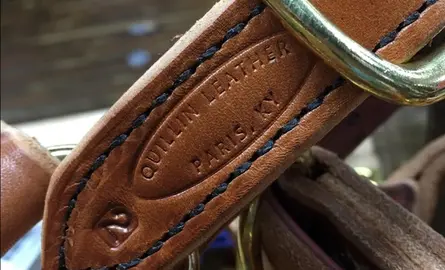
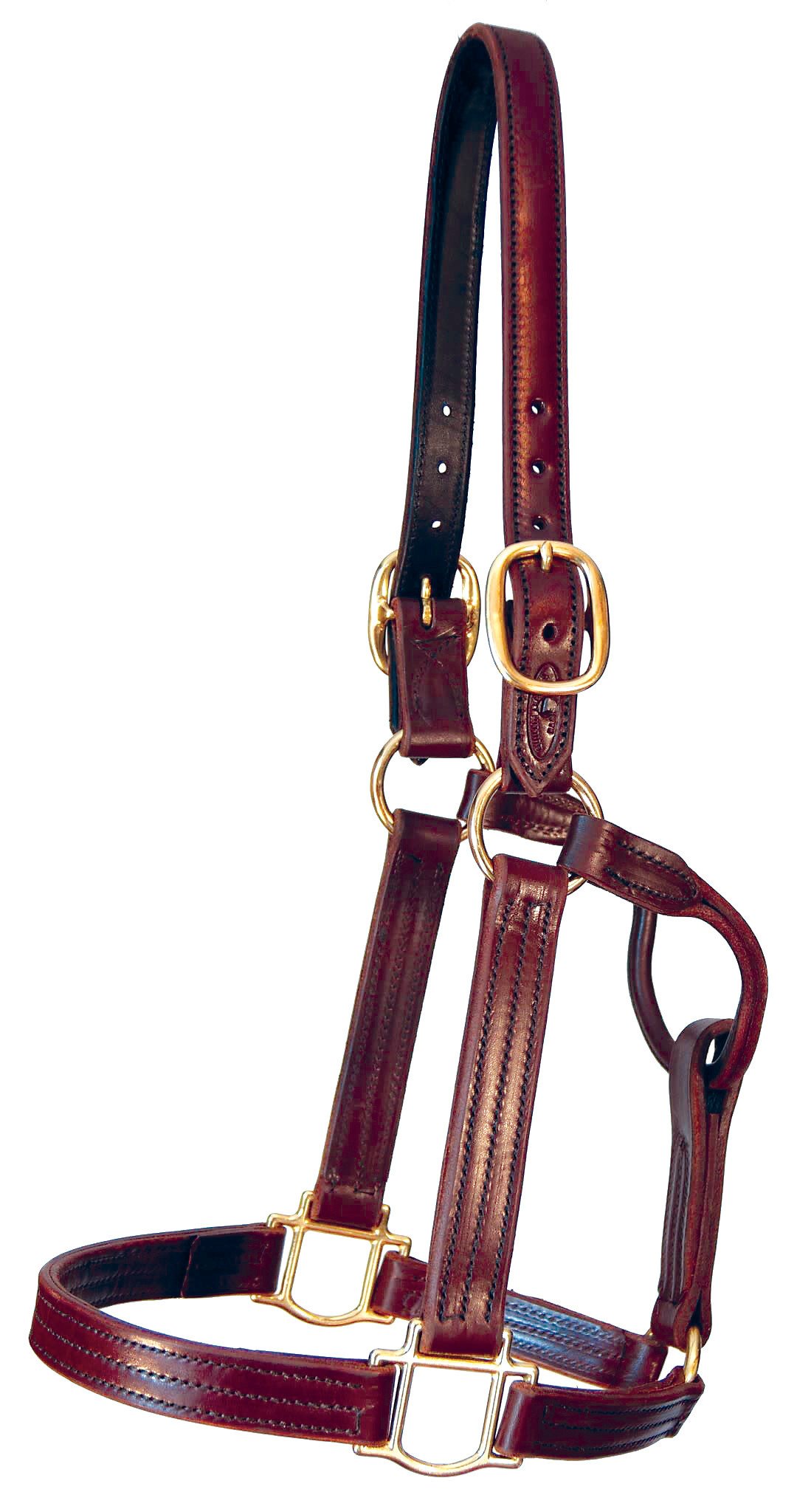
For our brown halters, we use solid brass hardware — not brass-plated, not zinc die-cast with a brass finish. Solid brass. It doesn't rust, doesn't corrode, and it develops a natural patina over time that looks exactly right on good leather. For black leather goods and black halters, we spec stainless steel hardware throughout — clean, rust-proof, and built to hold up in the kinds of environments horses live in.
This isn't a small thing. Hardware is where a lot of halters fail first — a corroding buckle or a weak snap can compromise a perfectly good piece of leather long before it should be replaced. We don't let that happen.
How it's built
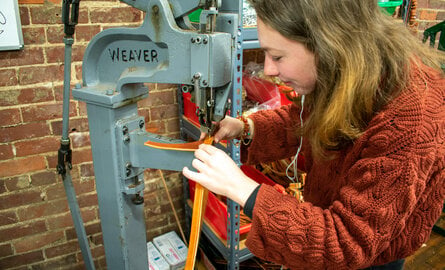
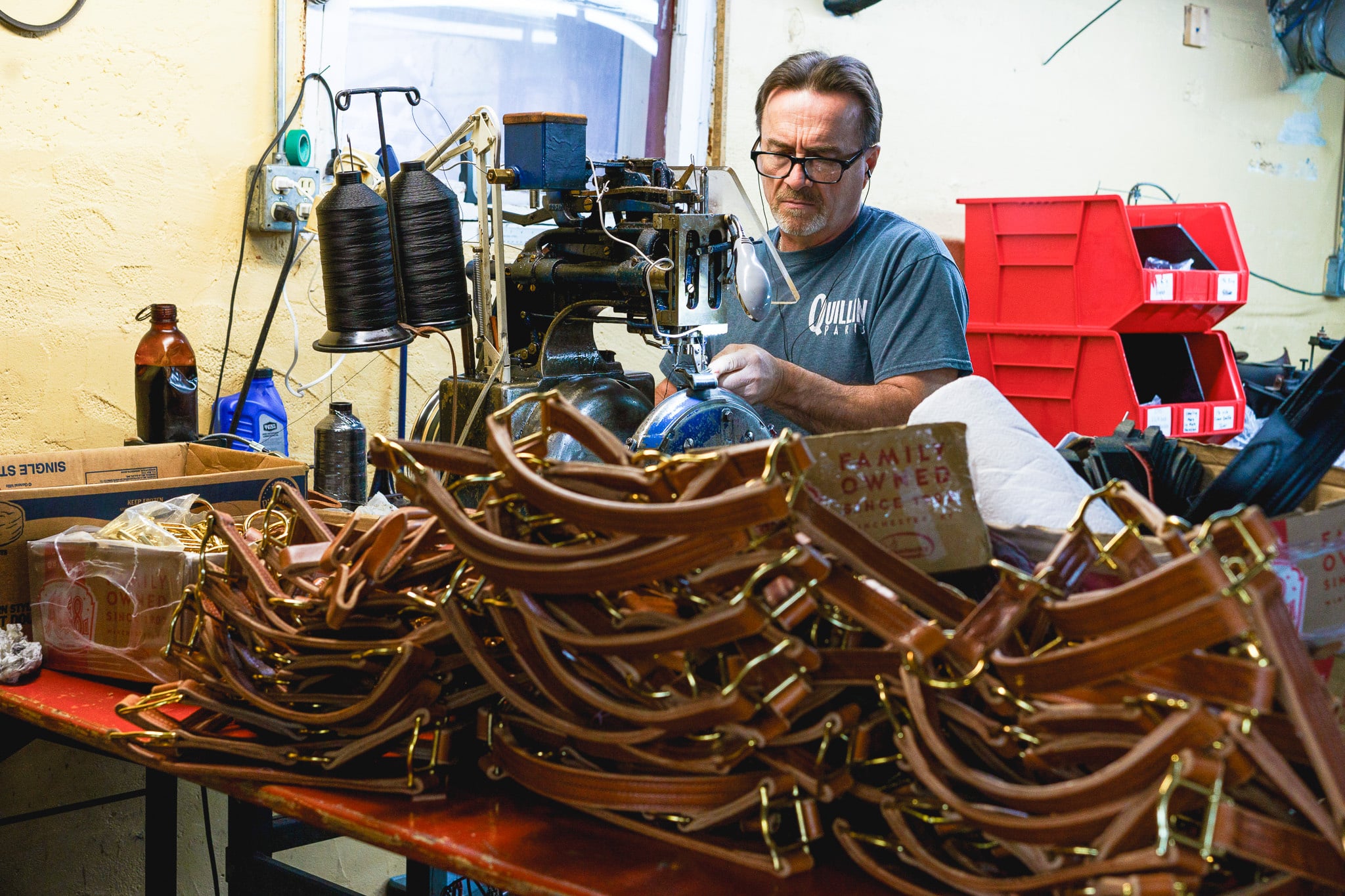
Once the leather is cut — by master craftsmen, not machines, not new hires — it goes to our Campbell stitchers. These are century-old industrial sewing machines, the kind they don't make anymore, because nothing since has done the job better. Our team of approximately 12 craftsmen, 3 who are dedicated to these 250 pound machines daily, and the skill that goes into threading, tensioning, and guiding a stitch line is something that takes years to develop. You can't automate it. You can't rush it.
The thread is 4-cord UV-resistant polyethylene — weather-resistant, colorfast, and strong enough to outlast most of what you'll put it through. It doesn't rot, doesn't fade, doesn't degrade in sunlight the way lesser thread does. We've made this choice deliberately because a halter that's outside every day needs thread that can keep up.
Leather:
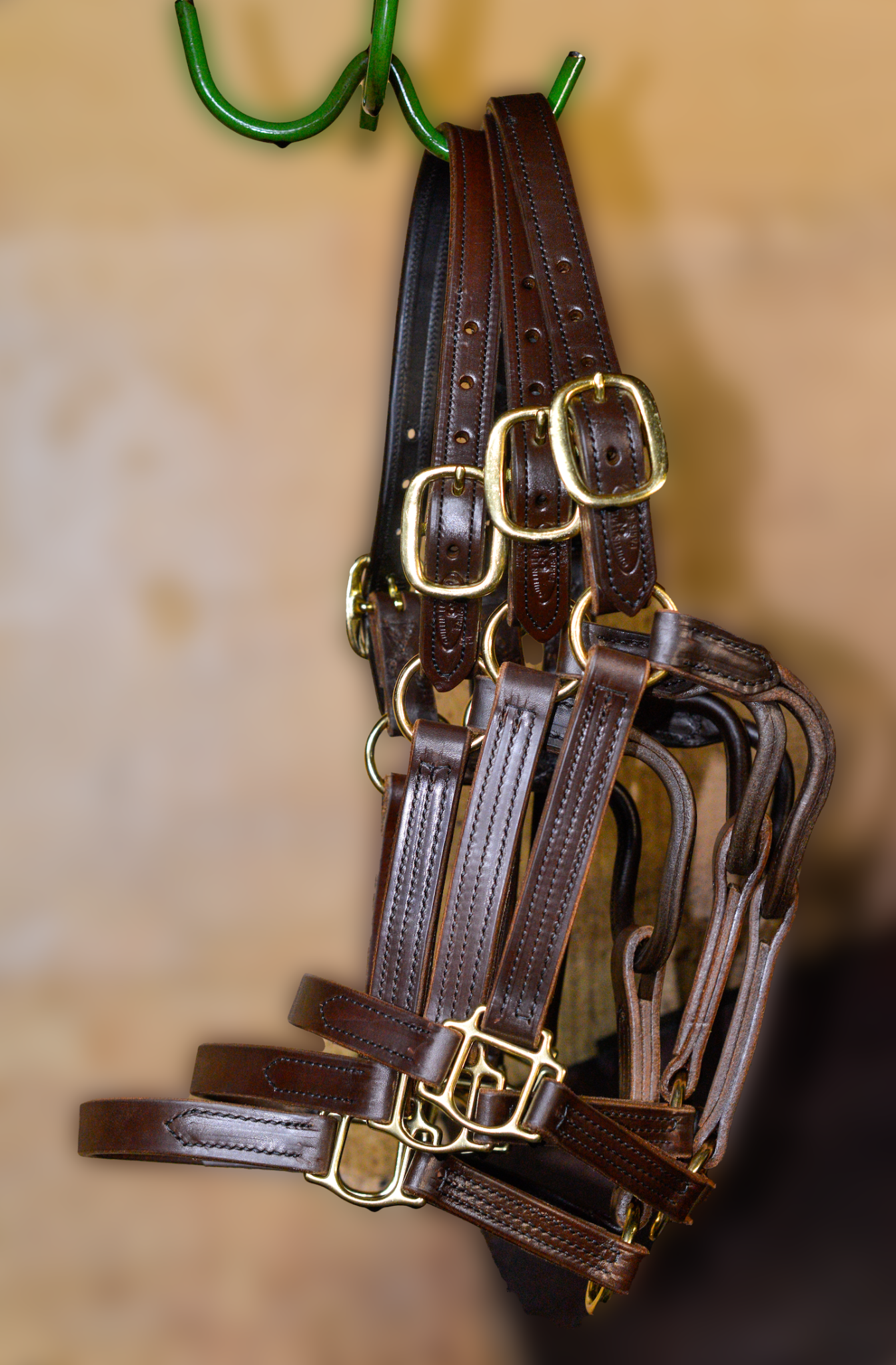
English finished bridle leather, hand-selected from the over 900 "sides" (450 cows) we go through each year. Heavy USA steer hides that are tanned to our specifications.
Hardware:
Solid brass (brown) · Stainless steel (black), no plated metsl that rusts after two months.
Thread:
4-cord UV-resistant polyethylene, weather-resistant
Finishing:
Hand-rubbed edges, hand-oiled for lasting condition
Finished by hand
Every halter require over 150 steps before it leaves this shop has had its edges hand-rubbed and been hand-oiled. The edge work seals the cut leather against moisture and wear — it's a detail that takes time, which is exactly why most production shops skip it. The oiling conditions the leather from the start, so it arrives at your barn already broken in, not stiff and prone to cracking through its first season.
We build over 12,000 halters a year this way. Every one of them is true small-batch work — made to order, by hand, from materials we've chosen specifically because they last. That's not a small operation, and it's not mass production. It's something in between: the scale of a working shop, with the standards of a craftsman who puts his name on everything that goes out the door.
Why it matters to us
Quillin Leather & Tack has been on Main Street in Paris, Kentucky since 1982. We've outfitted horses at farms like Claiborne — places where a halter isn't a commodity, it's a piece of daily working equipment that needs to hold up season after season. When you're handling million-dollar Thoroughbreds, or your own horses, you need gear that doesn't let you down.
We've never chased the cheap end of this business. We've watched a lot of competitors come through over the decades — lower prices, lighter materials, faster turnaround — and we've watched a lot of them go. The shops that last are the ones that do it right.
If it's worth doing, it's worth doing right. My father's Mantra that's echoed everyday by myself, my son, managers and son in laws. We've believed that since well before 1982, and we're still at it.